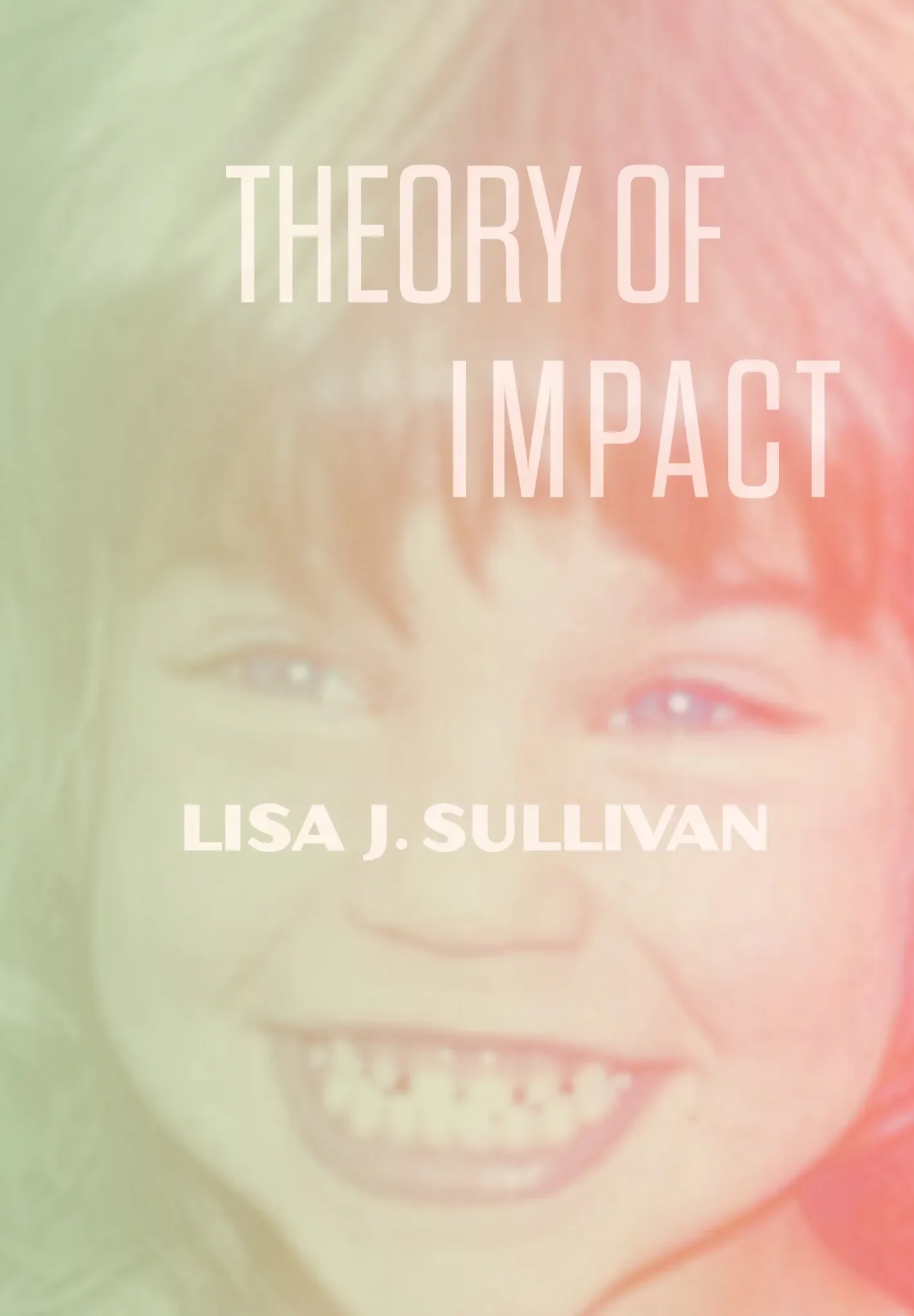
A Review of Lisa J. Sullivan’s Theory of Impact — August 25, 2026 by Ellen Austin-Li
“Dying maple leaf— / its new pattern / a butterfly” writes poet Lisa J. Sullivan in Theory of Impact, the author’s moving, first full-length poetry collection. This haiku, which appears early in the book, foreshadows the healing journey that shapes this book's arc. Five jewel-like haiku—equally dispersed between lyric and narrative free-verse groupings—serve as touchstones, heralding tonal or temporal transitions within this collection’s loose chronological order. These poems witness the bewilderment and grief that follow domestic abuse, consequent family dysfunction, and unchosen childlessness, but also highlight tender moments of human connection, natural beauty, and quiet transformation.
The opening haiku, “so many bleeding hearts / on one slender stem / a broken home,” introduces the early trauma the speaker experienced with an emotionally troubled, disabled veteran father. Disturbing snapshots unfold in painful pieces, like “Choreography,” where a shadowy memory of parents dancing reveals much more: “It was a gasp / a flail / the yank / of my mother’s hair.” The unpredictability of abusive behavior and mental illness is underscored by tender moments between child and father, as in “Bread Crumbs,” a poignant poem in which the young speaker joins her smiling father in a shared song as he spins the soft rock group “Bread” on the turntable.
The titular poem, “Theory of Impact,” recounts the untimely death of the school-aged speaker’s father, struck by a drunk driver in a crosswalk. Still, his presence lingers in dream and memory, and in aftereffects on the family. In the mesmerizing “On Coquina Beach,” the layered nacre in pearl formation represents a complex mother-daughter relationship: “To her, at times, I am the irritant / that starts the pearl...” The speaker notes, “Each shell I find reminds me of her,” with the following allusion to past abuse:
And there — a shell I've never found before, the lettered olive, slender, glossy, curled into itself, beige, with the zig-zag pattern of a fleeing rabbit.
We meet a younger brother who shares traumatic memory and “letting go” with his sister. The adult siblings tentatively patch together shadowy recall, giving voice to what was unspoken and endured with such physical closeness as children, that the speaker remembers feeling her brother’s heartbeat when they “hid in the crawlspace, blocked our ears and hummed away the violence downstairs.”
An expectant sister paints a baby’s portrait in “Pointillism” as we transition to a time when the dream of motherhood becomes impossible. In “The Childless Mother,” an ultrasound picture of a lost pregnancy becomes “…more than baby—you are my evidence.” A series of poems tenderly explores this particular grief with rich nature imagery and metaphor. In “Nesting Season,” a personified bird with an eggless nest implores: “Will my song be enough?” An ekphrastic poem, “Against Desire,” marvels at the beauty of a waterlily, noting that “… with time, out of the muck, / the sulfurous air, grows grace…” Indeed, in “Home,” love emerges as a friend pulls “the maple taps / so the wounds can heal.”
In a striking testament to empathy’s power, the final ten-page poem, “Parts of a Letter,” returns to the father. The epigraph explains: “Twenty-seven years after his death, I receive my father’s letters home from the Marine Corps (1961-63).” Organized into parts of a letter—envelope, stationery, salutation, body (further subdivided into locations and dates), valediction, and postscript—the expansive form’s long roll-out mirrors the psychological toll of military service. Casual letters from US Army barracks give way to fraught missives from Southeast Asia, culminating in a report from an army official about the young soldier’s hospitalization for a psychotic break. The poem concludes with an address to the long-deceased father: “At this moment, I don’t care about the wrongs you’ve committed.” The speaker wishes she could cook “something rich and time-consuming” for him, so that he’d “smile — / tell me everything was delicious.” In the white space between the letters’ elements, we imagine the root causes of family dysfunction and envision the possibility of healing. The ability to look back with empathy (and perhaps forgiveness): this is the gift these letters provide—the lesson readers share as we “inhale // their exhalation.”
In Theory of Impact, Lisa J. Sullivan’s emotional honesty and finely crafted poems resonate— trauma and love coexist. This poet honors the complexity of family relationships by balancing what is shown and what is withheld between lines and poems. You won’t soon forget this moving debut poetry collection from Lily Poetry Review Books.