Lise Goett
"Nocturne"
Lise Goett


Nocturne

I am always aware of the Lord’s presence; he is near, and nothing can shake me.
Psalm 16:18 


I breathe in to know I am living, each breath
  a night mirage of black figures I behold
under a boreal swirl, hallucinating my way home

past the center divide as night tilts and whirls its Graviton,
  pressing my back to its wall, bottom falling.
  Holy joy, says the apostle. The world’s giddy occupants hurl

  their slurry—puce vomit and spittle flying everywhere.
  A night sky crowns its head over night’s brocade:
meadows of stars and cheat grass vibrating.

Amethyst edges of ponderosa and white quartz throw a bare, pale light—
  almost a vapor on the verge of my stupor, where so many are taken
  20 hours on the road—tor of sunlight spilling through the branches

  not yet, birdsong not yet
  a hosanna.
Heaven’s milky spurge and the sprockets of median sing their Khôra: you will die,

you will die,
their lyric of nonbeing, as my car glides like a planchette, a divination,
  and the sirens hum a lullaby to me who has never felt closer to God than
  on this ballet-slalom of S-curves, their melodic, cantilevered play

              orchestrated to the riverine lilt of the bosque,
  asphalt shimmer
in the 20th hour, as the black figures retreat

into their nocturne, their nocturnal velvet
  where, meek as sheep, they will bed until morning, not yet
  invited to take me, still breathing—

  vatic, I and God breathing—underneath everything the tilt,
  the breeze, the black figures at the verge waiting,
their lyric of nonbeing caroled at the edge of calling into form—

that God fire,
  I have seen it.

"ICE"
Lise Goett


ICE

You say I should go down further still, but I am already very deep down, and yet, if it must be so, I will stay here. What a place! It is probably the deepest place there is. But I will stay here, only do not force me to climb down any deeper. —Franz Kafka

On the hard-ax edge of night,
the car battery gone dead, motion lights burnt out,
they come to thin the flock, predators

kid-gloved and cagey as crackheads,
America’s pure product, come down
from the mountains, wanting hen.

It’s better to scream, and they do. You hear each of them,
one by one, just after dark and then again
before that light called dawn, be taken in the dark.

You pull the fleecy blanket over your head,
but if you can’t have peace, to be comatose will suffice,
the rage and toil of day and news enough for one Old Hen—

everyone gone to bed by dark except the predator
who takes the black ones, leaving two bouffant, Jello-ring-sized
mounds of blue-black feathers,

ruby sores where necks and heads
once were, the lint of tail-
feathers, reticulated wings.

All that moves at this hour belongs to the house of stealth, glisters
with its marquise-diamond malice,
light of foot and fleet.

Usually, they will take only one hen and drag her off,
remains never to be found.
The predators aren’t carolers

who mean you any good.
They wear masks, gliding down like paratroopers
from an overhanging limb.

They mean to kill you,
they mean to take out everything
you’ve ever loved—

your golden, the gentle one.
You’ve screwed the lid down of the nest box for one
last member of the flock.

It would be easy to sink into the white hummocks
and go numb. Predators are protected.
You can trap and relocate them where they’ll

simply groom another flock, like priests,
but you can’t shoot them, sister,
or can you?


Also by Lise Goett: "My Antonia," "Festina Lente," "Difficult Body," "Wabi-Sabi"


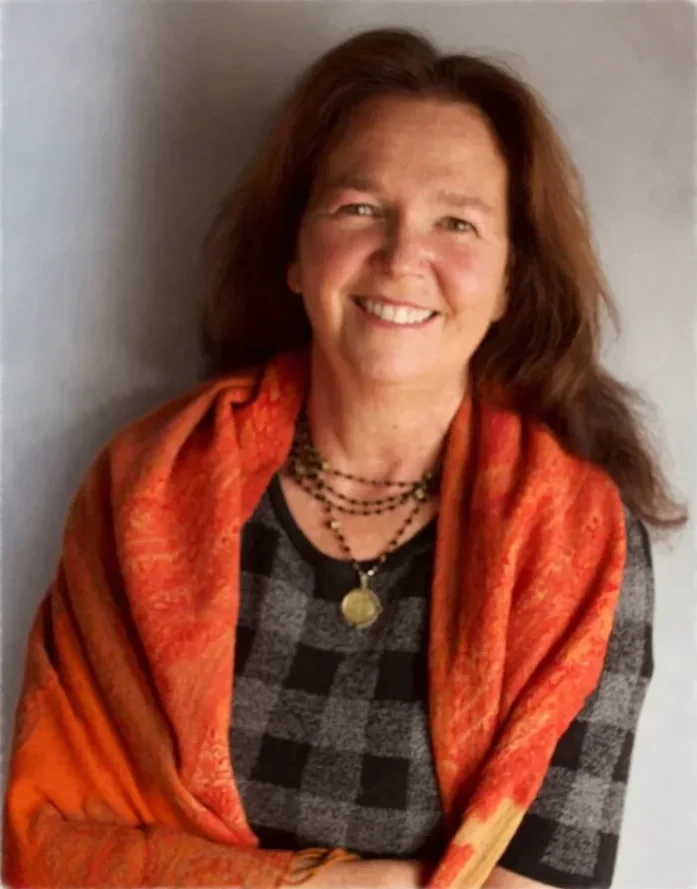
Lise Goett has published three poetry collections, The Radiant, her most recent. Winner of the Tupelo Press 2015 July Open, her second collection, Leprosarium, was chosen from over 1200 by Tupelo Press and was the winner of the Robert H. Winner Memorial Award in Poetry from the Poetry Society of America and the Palette 2020 Spotlight Award. Other honors include The Paris Review Discovery Award, The Pen Southwest Book Award in Poetry, the Capricorn Prize from the West Side Y, the James D. Phelan Award, and The Barnard New Women Poets Prize for her first poetry collection, Waiting for the Paraclete (Beacon, 2002), as well as postgraduate fellowships from The Milton Center and the Creative Writing Institute at the University of Wisconsin-Madison. She is a contributor to Tupelo Press’s anthology Poems Talking to Poems, on how to make one’s poetry manuscript stand out in a crowd and works from her home as a manuscript editor.

ISSN 2472-338X
© 2026