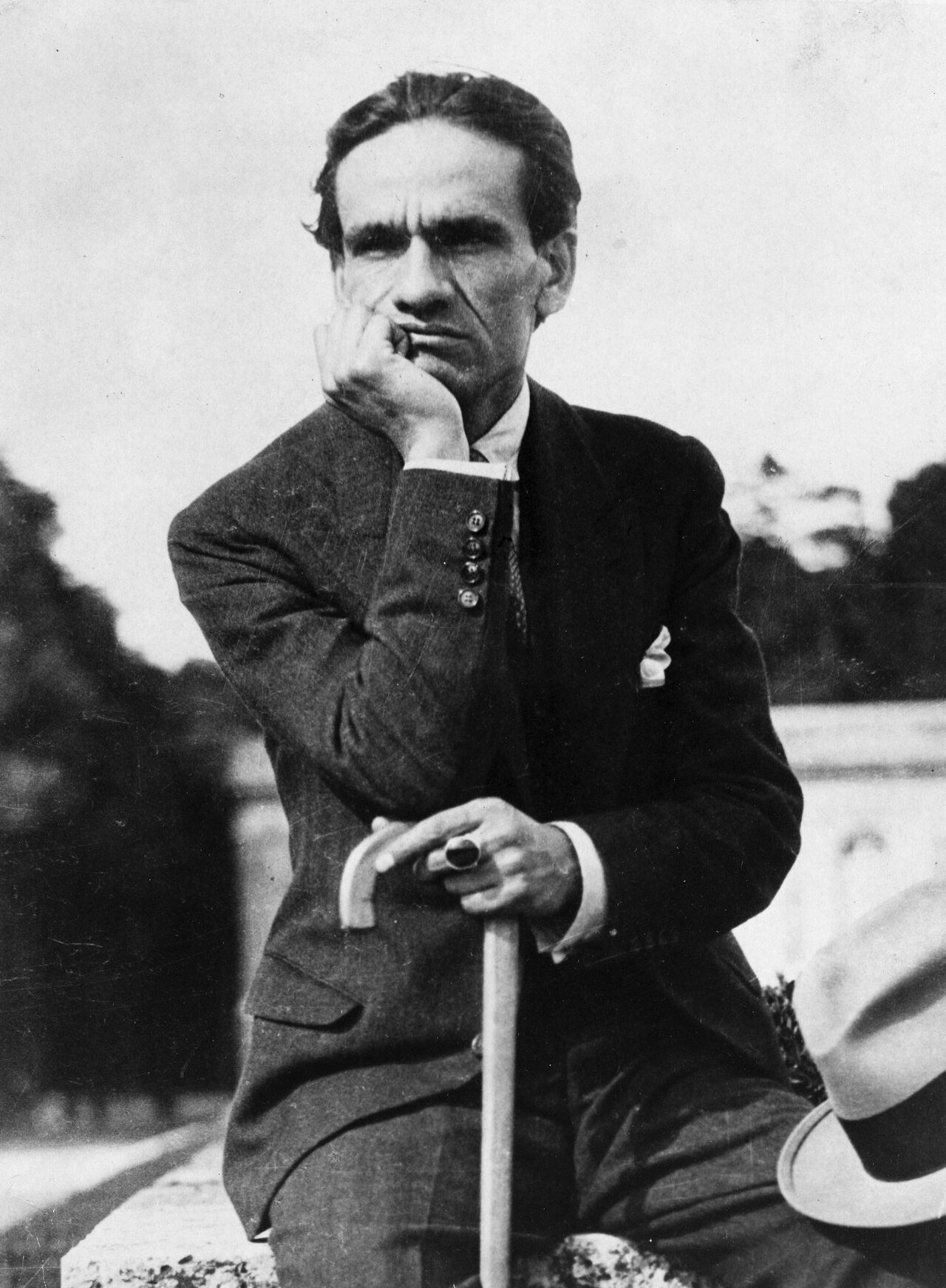
César Vallejo, translated and read by Rebecca Seiferle
The Violence of the Hours
They have all died.
Died, Doña Antonia, the gruff one, who made cheap bread in the village.
Died, the priest Santiago, who was pleased to be greeted by the young men and women, responding to all, without distinction: “Good morning, José! Good morning, María!”
Died, that young blond girl Carlota, leaving a little son of some months, who then also died eight days after his mother.
Died, my aunt Albina, who used to sing times and modes of inheritance, while sewing in the corridors, for Isidora, the maid by trade, the most honorable woman.
Died, an old one-eyed man, I don’t remember his name, but he slept in the morning sun, sitting before the door of the tinsmith on the corner.
Died, Rayo, the dog of my height, wounded by a gunshot from no one knows who.
Died, Lucas, my brother-in-law in the peace of the waistlines, with whom I agree when it rains and there’s nobody in my experience.
Died in my revolver my mother, in my fist my sister and my brother in my bloody viscera, the three connected by a sad gender of sadness, in the month of August in successive years.
Died, the musician Mendez, tall and very drunk, who sol-fa-ed melancholic toccatas on his clarinet, to whose articulation the hens of my neighborhood would fall asleep, long before the sun went down.
Died, my eternity, and I am keeping vigil over it.
César Vallejo, translated and read by Rebecca Seiferle
The Nine Monsters
And, unfortunately the pain grows in the world every minute, grows by thirty minutes per second, step by step, and the nature of the pain, is the pain twice over, and the condition of martyrdom, carnivorous, voracious, is the pain twice over, and the function of the purest herb, the pain twice over, and for the good of being, we hurt doubly.
Never, human men, was there so much pain in the chest, in the lapel, in the wallet, in the glass, in the butcher shop, in the arithmetic! Never so much painful tenderness, never so close did the distance attack, never has the fire played better its role of dead cold! Never, Mr. Health Minister, was health more deadly and did the migraine extract so much forehead from the forehead! And the furniture had in its drawer, pain, the heart, in its drawer, pain, the lizard, in its drawer, pain.
Misfortune grows, human men, faster than the machine, than ten machines, and grows with the beef of Rousseau, with our beards; evil grows for reasons that we ignore and it is a flood with its own liquids, with its own mud and its own solid cloud! Suffering inverts positions, produces a function in which the aqueous humor is vertical to the pavement, the eye is seen and this ear is heard, and this ear strikes nine chimes at the hour of lightning, and nine fits of laughter at the hour of wheat, and nine female sounds at the hour of weeping and nine canticles at the hour of hunger and nine thunders and nine whips, minus a scream.
Pain seizes us, human men, from behind, in profile, and drives us crazy in the cinemas, it nails us in the gramophones, it unnails us in the bed, falls perpendicularly to our tickets, to our letters; and it is very grave to suffer, one can pray... Well as a result of the pain, there are some who are born, others grow up, others die, and others who are born and don’t die, others who without having been born die, and others who are neither born nor die (they are the most).
And also, as a result of suffering, I am sad to my head, and sadder to my ankle, at seeing the bread, crucified, the turnip bloody, crying, to the onion, to the cereal, in general, wheat, to the salt, made dust, to the water, fleeing, to the wine, an ecce homo, so pale to the snow, so burning to the sun! How, human men, to not tell you that I just can’t any longer and I can’t any longer with so much drawer, so much minute, so much lizard and so much investment, so much distance and so much thirst for thirst! Mr. Health Minister, what to do? Ah! Unfortunately, human men, there is, brothers, so much to do.
César Vallejo is considered a great poetic innovator, so much so that, despite his writing fiction, plays, essays and articles and publishing only two poetry collections in his lifetime, he is primarily known for his poetry. As a young man in Peru, he published Los heraldos negros (The Black Heralds) (1918) and Trilce (1922), considered a masterwork of poetic experimentation, though it also voices the sheer animal loss of his freedom. In 1920 he was arrested as the “intellectual instigator” of a local uprising that occurred when he went home from college to visit his family. He spent several months in jail and was only released due to the petitions of various editors and writers. When subsequently the authorities wanted to reopen the charges, Vallejo decided to leave for Paris in 1923. He never returned to Peru, and his life in Paris and then Madrid for short periods of time was often marked by poverty, the fear of prosecution, and bouts of difficult illness, as well as his commitment to political activism, as a Marxist, as one fighting against the rise of fascism in Spain. His posthumous poems published by his widow after his death are considered among the most powerful and complex of his works.
Rebecca Seiferle’s translation The Dream of Apples: Selected Poems of Federico García Lorcawon the Stephen Mitchell Prize for excellence in translation. She has published four poetry collections. Wild Tongue won the Grub Street National Poetry Prize and Bitters won the Western States Book Award. Her translation of César Vallejo’s Trilce was published in 1992 and her translation of The Black Heralds in 2003. Her translations of various Cuban poets are included in The Whole Island: Six Decades of Cuban Poetry and her translations of Ernesto Lumbreras and Alfonso d'Aquino in Reversible Monuments: Contemporary Mexican Poetry. She has been awarded a Lannan Literary Fellowship for Poetry, an Arizona Commission on the Arts Research and Development Grant, and was Tucson Poet Laureate for two terms from 2012–16.